

 Terry KS
 Money20/20 Asia 2026 kicked off with industry leaders highlighting the urgent need for AI-driven innovation, fraud prevention, and financial inclusion. The event underscored the convergence of traditional and decentralised finance as a defining trend shaping the future of money.
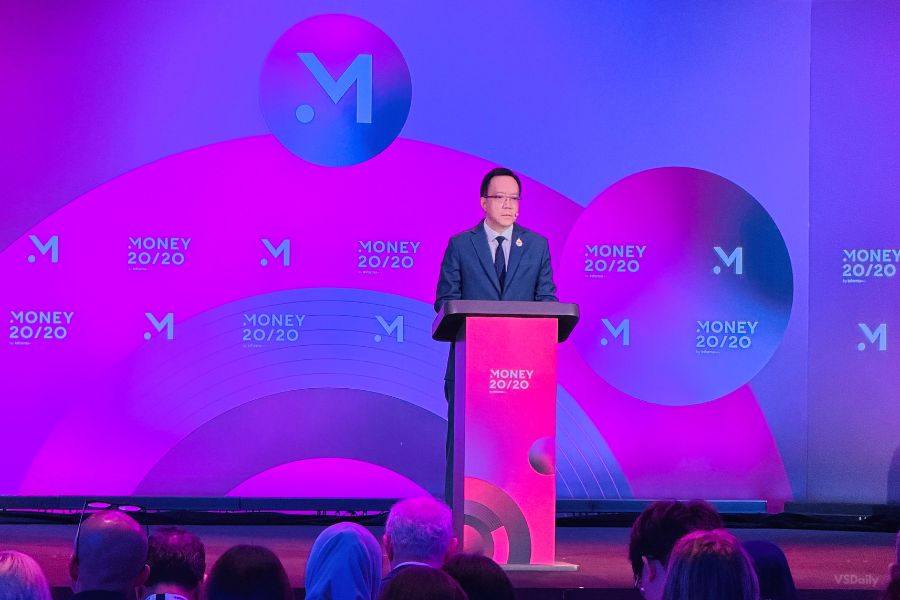
THAILAND, 22 APRIL 2026 – The opening day of Money20/20 Asia 2026 delivered a series of high-impact discussions and major industry announcements, setting the tone for the future of financial services across Asia and beyond. Key themes included fraud prevention in the digital age, financial inclusion, artificial intelligence adoption, and the growing convergence between traditional finance and decentralised ecosystems.
Several major announcements were unveiled during the event. LianLian Global revealed a strategic remittance partnership with London-based fintech USI Money to strengthen its global payment corridors, while dLocal introduced its Stablecoin Suite, enabling seamless integration of stablecoins as local payment methods in emerging markets.
Meanwhile, MetaComp launched the StableX Know-Your-Agent framework, positioning it as a governance model for AI agents operating in regulated financial environments. FIS also announced plans to roll out its PRIME platform on AWS Asia Pacific (Singapore) by 2027, marking a significant regional expansion following its acquisition of Global Payments’ Issuer Solutions business.
Research insights were also highlighted, with FXC Intelligence projecting that Asia’s cross-border payments market could reach $24 trillion by 2033, reflecting a shift from pilot initiatives to large-scale real-world adoption.
A keynote session led by Daranee Saeju from the Bank of Thailand emphasised the country’s progress in digital public infrastructure, including systems such as NDID and PromptPay. While these platforms have accelerated financial access, she noted that fragmented data remains a barrier to broader financial inclusion, particularly in credit access for individuals and small businesses. Initiatives such as “Your Data” aim to enable secure, consent-based data sharing to bridge this gap.
The convergence of traditional finance and decentralised finance emerged as a major theme, with speakers highlighting the need for better infrastructure, regulatory clarity and institutional collaboration. Akshika Gupta noted that clients are increasingly seeking improved financial rails rather than purely decentralised solutions, while Joseph H.L. Chan stressed that regulation should support, not hinder, innovation.
Artificial intelligence also took centre stage, particularly in discussions around platform-as-a-service models. Garry Sien highlighted that AI is moving beyond productivity gains to drive revenue growth, operational scale and enhanced user experiences, with AI-native applications already being deployed in financial services.
Tokenisation and digital assets were another focal point, with industry leaders pointing to the need for legal clarity, interoperability and stronger infrastructure to enable institutional adoption. Alvin Chia noted that confidence in tokenised assets depends heavily on legal certainty, while experts emphasised that liquidity ultimately relies on active market participation rather than technology alone.
Banking transformation in Asia was also widely discussed. Kattiya Indaravijaya described uncertainty as the new norm, calling for more adaptive, data-driven strategies. She highlighted the importance of “data liquidity” in improving customer experiences and operational resilience, while stressing that trust is evolving from safeguarding money to protecting users’ digital lives.
Cross-border payments and borderless commerce were explored as key growth drivers. Shiven Madan noted that the challenge now lies in enabling seamless global transactions not just for travellers, but also for small businesses operating internationally. Industry leaders pointed to AI and partnerships as critical tools to reduce friction, costs and complexity.
The concept of invisible banking also gained traction, with speakers highlighting how financial services are increasingly embedded into everyday digital experiences. Dr. Waqas Javed emphasised that while banking may become invisible, trust must remain visible, particularly as AI-driven systems handle more decision-making processes.
Across sessions, a consistent message emerged: innovation must be balanced with accountability. Leaders stressed that while financial services are becoming more integrated and technology-driven, responsibility remains with licensed institutions. Collaboration between banks, fintechs and regulators will be essential to ensure secure, inclusive and sustainable growth.
As the first day concluded, Money20/20 Asia 2026 reinforced its role as a key platform for shaping the next phase of global finance—where AI, data, and collaboration redefine how money moves across borders and ecosystems.