

 Rebecca PY
 MALAYSIA, 19 JUNE 2026 – RICOH Malaysia took centre stage this week with the launch of its AI and automation showcase, “RICOH Empowering AI – Smarter Work, Real Impact,” held at M World Hotel, Petaling Jaya — an event that made one thing abundantly clear: the era of AI pilots and proof-of-concepts is giving way to something far more tangible.
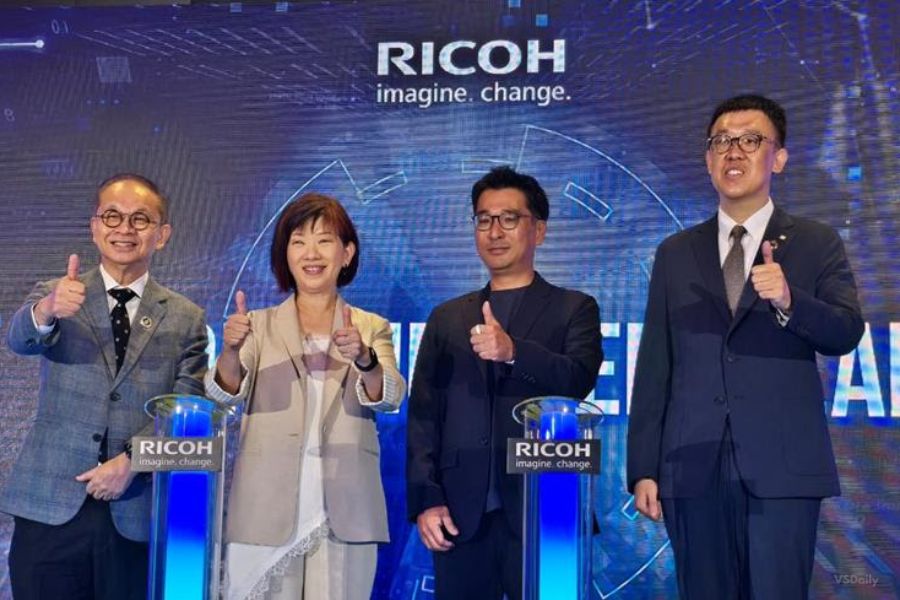
Officiated by RICOH’s Chief Digital Officer for the APAC Region Satoshi Tsugane, Federation of Malaysian Manufacturers (FMM) President Jacob Lee Chor Kok, and RICOH Malaysia Managing Director Alice Lee, the gathering brought together industry stakeholders, technology providers, and policymakers united by a shared goal — accelerating Malaysia’s industrial modernisation.
The timing is no coincidence. Malaysia’s New Industrial Master Plan 2030 (NIMP 2030) has set an ambitious target of developing 3,000 smart factories through the widespread adoption of automation, artificial intelligence, and advanced technologies. RICOH’s showcase positioned itself squarely within that national vision, demonstrating how intelligent technologies can be woven into existing operational workflows across logistics, manufacturing, inspection, and workplace management.
Tsugane noted that organisations across the Asia-Pacific region are increasingly demanding solutions that move beyond experimentation and deliver measurable business value. Connecting information, workflows, and people more effectively has become the defining challenge of modern digital transformation, he said, and RICOH’s approach centres on helping businesses translate that ambition into operational reality.
FMM President Jacob Lee echoed that urgency, observing that manufacturers face mounting pressure to improve productivity and competitiveness amid increasingly complex operating conditions. The real challenge today, he stressed, is no longer simply whether to adopt technology, but how to integrate solutions that produce demonstrable improvements on the ground.
The showcase spotlighted three distinct pillars of intelligent operations. First, AI as an enabler of operational precision — featuring intelligent inspection systems covering smartphone defect detection, fibre optic inspection, and print quality monitoring. Second, AI as a driver of workflow intelligence, presenting integrated workplace tools designed to improve information accessibility and day-to-day coordination. Third, AI as the foundation for connected operations, showcasing automation technologies built to make workflows more adaptable and responsive across diverse business environments.
Alice Lee underscored that RICOH’s priority extends beyond automation for its own sake. The company’s focus, she explained, is on helping organisations build long-term operational agility — deploying intelligent technologies in scalable, practical ways that suit everything from logistics floors to manufacturing lines and inspection bays.
As Malaysia cements its position as a regional manufacturing and logistics hub, events such as this serve as a barometer for how quickly AI is maturing from boardroom conversation to shop-floor reality.