

 Rebecca PY
 MALAYSIA, 23 JUNE 2026 – Two of Malaysia’s most recognisable institutions have come together to address one of the quieter challenges in the country’s workforce landscape: what happens to workers after they recover from a workplace injury or health setback, and whether they can find a genuine path back to meaningful employment.
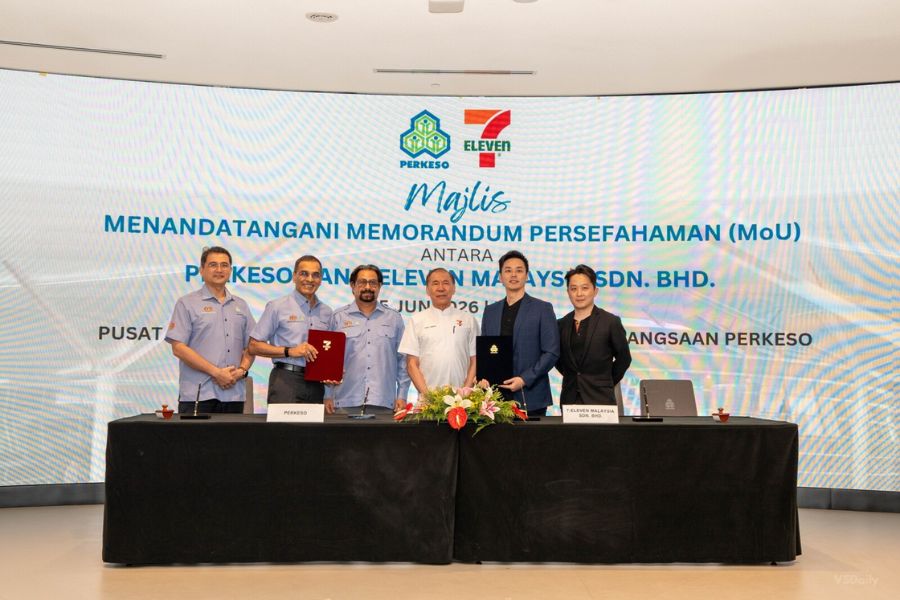
PERKESO, the national social security organisation, and 7-Eleven Malaysia formalised a strategic partnership through a Memorandum of Understanding signing held at the Pusat Rehabilitasi Neuro-Robotik dan Sibernik Kebangsaan PERKESO in Meru, Perak. The agreement marks the first formal employment-focused collaboration between the two organisations and centres on 7-Eleven Malaysia’s participation in PERKESO’s Return to Work programme.
The RTW programme is designed to support PERKESO-insured persons through the transition from rehabilitation back into active workforce participation. Under the new partnership, programme participants will gain access to pre-employment training, structured workplace exposure, workforce readiness initiatives, and potential employment opportunities within 7-Eleven Malaysia’s retail operations across the country.
The practical dimension of the collaboration is significant. As Malaysia’s largest convenience store chain with more than 2,700 stores nationwide, 7-Eleven Malaysia offers something most corporate partners cannot: genuine geographic reach. Participants will be able to access opportunities within their own communities, reducing one of the most practical barriers to workforce re-entry, which is the distance and disruption of having to travel far from home during what is already a demanding personal transition.
Within the programme, participants will receive hands-on experience in customer service, product management, and daily retail operations, structured skills that carry genuine transferability beyond the immediate placement. Onboarding, workplace guidance, supervision, and ongoing support will be provided throughout each participant’s placement journey, developed in close collaboration with PERKESO.
The chairman of 7-Eleven Malaysia Holdings Berhad, Tan Sri Dato’ Seri Mohd Annuar bin Zaini, framed the initiative in terms that went beyond conventional corporate responsibility, describing recovery as not only about regaining physical strength but equally about restoring confidence, dignity, and the opportunity to participate meaningfully in society once again. For 7-Eleven Malaysia, he noted, giving back to the community is a commitment to creating meaningful impact, not simply a governance obligation.
Both organisations have been deliberate in framing the programme as a long-term initiative rather than a token gesture. The structure is designed to create sustainable employment pathways that support economic self-sufficiency over time, with plans to progressively expand the programme to additional locations and participants nationwide following the placement of the first cohort, targeted for before the end of 2026.
The partnership also speaks to a broader policy conversation in Malaysia about the role of public-private collaboration in strengthening the country’s social protection ecosystem. PERKESO brings decades of rehabilitation expertise; 7-Eleven Malaysia brings scale, operational structure, and a retail environment that is accessible and familiar to communities across the country.
Together, the two organisations are attempting to close the gap that often exists between medical recovery and genuine reintegration into working life, a gap that, left unaddressed, can turn temporary setbacks into permanent exclusion from the workforce.