

 Terry KS
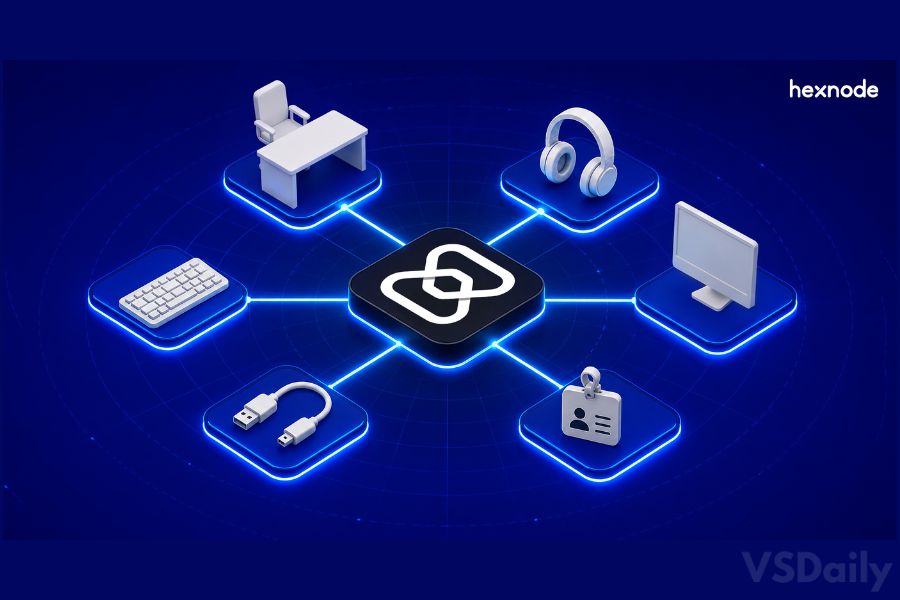
SINGAPORE, 25 NOVEMBER 2026 – Enterprise endpoint management provider Hexnode has introduced native IT Asset Management (ITAM) inside Hexnode UEM, extending the platform’s capabilities to govern the ownership, assignment, and full lifecycle of workplace hardware and physical assets. By linking physical asset records directly with enrolled devices and user profiles, the update consolidates equipment inventory, maintenance schedules, financial data, and physical audits into a single console.
While standard endpoint enrollment captures managed computers and mobile devices, organizations also rely on monitors, peripherals, loaner units, and office equipment that require assignment histories, maintenance tracking, and verified disposal. Hexnode Asset Management bridges this gap by placing physical asset data alongside endpoint and employee records.
Sahad M, Chief Technology Officer at Hexnode, noted that IT teams are accountable for far more than the devices they enroll. He explained that while a device may be properly configured, organizations often lack complete records regarding who holds it, what accessories accompany it, and when it needs to be recovered, adding that integrating asset records directly into UEM gives IT teams a stronger foundation to manage that responsibility.
Available to customers on the Hexnode UEM Enterprise plan and above, Hexnode Asset Management delivers four core operational pillars:
Alongside native ITAM, Hexnode UEM has rolled out two additional device management enhancements. Dedicated Shared Device Policies for Android support frontline and shift-based workforces by enabling individual user sign-ins, automated session logouts, and granular app permissions that keep select applications accessible between shifts while securing sensitive tools behind authentication.
For Windows environments, Hexnode UEM now offers remote BIOS management on supported PCs, enabling administrators to configure boot orders and manage firmware passwords directly from the console. This capability simplifies tasks such as preparing endpoints for network imaging, rotating passwords after staff departures, and clearing credentials prior to device resale without requiring desk-side visits or custom vendor scripts.