

 Terry KS
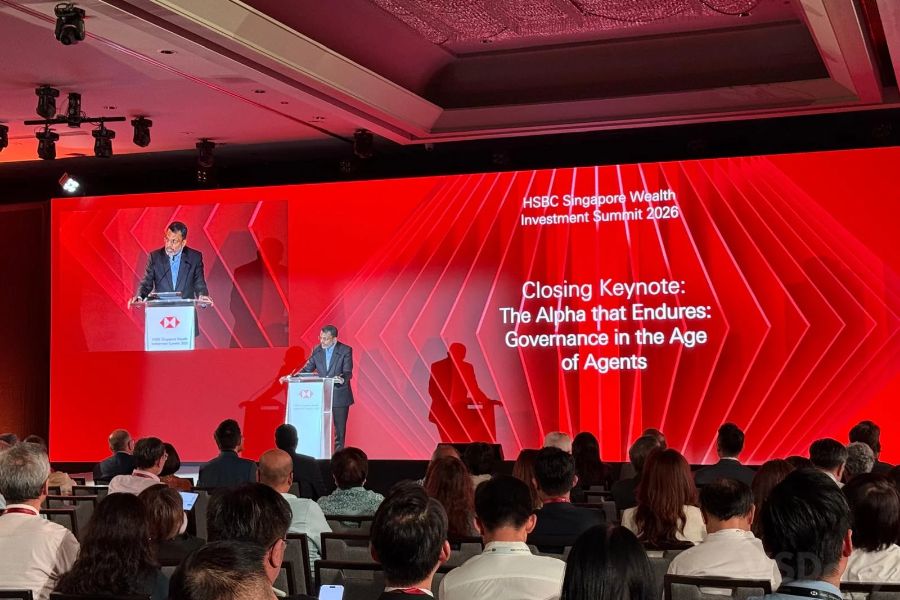
SINGAPORE, 17 NOVEMBER 2026 – Speaking at the closing session of the HSBC Singapore Wealth Investment Summit at Hilton Orchard on 17 November 2026, Global Finance & Technology Network (GFTN) Chairman Ravi Menon addressed mounting market anxiety surrounding artificial intelligence valuations and infrastructure spending.
Against a backdrop of over US$700 billion in annual capital expenditure guided by the four largest cloud providers and a recent pullback in technology equities—which saw the Nasdaq decline over 10 percent from its October peak—Menon emphasized that investors must distinguish between the technology cycle and the capital cycle. While AI capabilities have progressed rapidly, with leading models now handling tasks equivalent to more than a full working day for a skilled human, capital markets frequently overshoot and reprice independently of underlying technological progress.
To navigate potential volatility, Menon advised long-term investors to trace the true circle of revenues across interconnected cloud, chipmaker, and AI laboratory commitments, while looking past asset-class labels to recognize concentrated exposure across tech equities, corporate bonds, private credit, and data-centre real estate.
Looking beyond market fluctuations, Menon argued that durable returns in the AI era will stem from robust governance—particularly with the rise of agentic AI. Unlike conventional models that simply respond to prompts, agentic systems plan, utilize tools, move funds, and execute complex workflows with minimal human intervention. While McKinsey projects that AI agents could orchestrate US$3 trillion to US$5 trillion in global consumer commerce by 2030 and democratize personalized wealth management, Menon warned that finance lacks physical friction, meaning flawed autonomous instructions can cause immediate systemic damage.
To ensure financial institutions harness agentic AI safely, Menon introduced a five-pillar governance framework structured around the acronym ALPHA:
Concluding his remarks, Menon noted that as raw computation becomes a widely accessible commodity, the institutions that thrive will be those that pair technological adoption with disciplined governance and independent human judgment.