

 Rebecca PY
 MALAYSIA, 18 AUGUST 2026 – Malaysia has established a clear direction for its industrial future under the New Industrial Master Plan 2030, placing high value manufacturing, digitalization, and enhanced productivity at the forefront of national economic growth. However, industry leaders emphasize that adopting new technologies is only half the battle, as lasting success depends heavily on developing workforce capabilities and operational processes alongside digital investments.
Over the past decade, automation, data analytics, and digital systems have fundamentally altered global factory operations, boosting output speed and product quality. Yet as these innovations become widespread standard practice, technology alone no longer guarantees a competitive edge. The manufacturers achieving sustainable growth are those successfully integrating digital tools into daily workflows while continuously training their teams to operate in modern environments.
A common misconception in the sector is that automation exists purely to replace human labor. In practice, technology shifts the responsibilities of factory personnel away from manual tasks toward data interpretation, rapid problem solving, and real time decision making. Acquiring new machinery remains the straightforward part of industrial evolution, whereas building organizational skills, refined processes, and an adaptive mindset requires long term dedication.
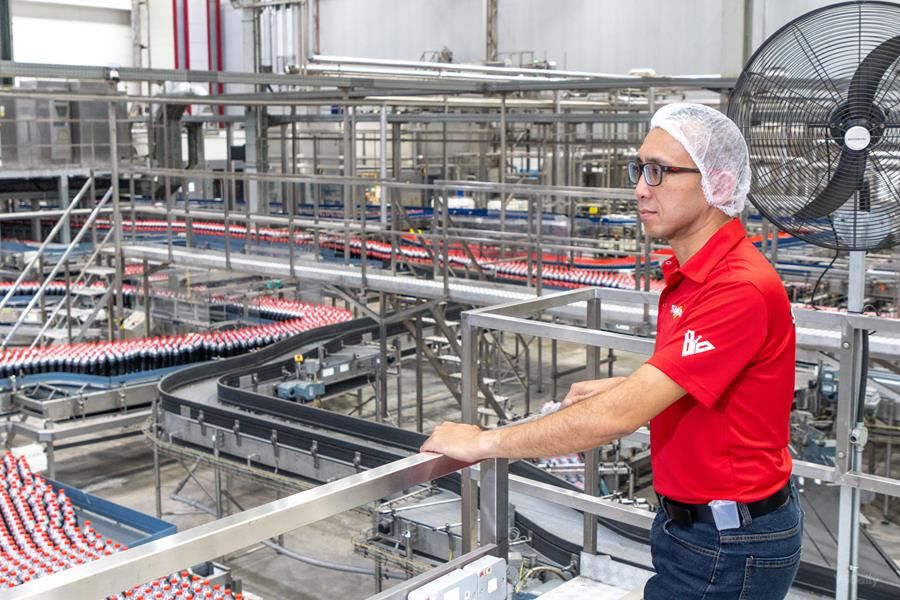
At Coca-Cola Bottlers Malaysia, this operational evolution has unfolded over fifteen years at its primary manufacturing and distribution hub in Bandar Enstek, Negeri Sembilan. The plant introduced an Automated Storage and Retrieval System, representing the first high throughput, high density storage solution of its kind for Coca-Cola in Southeast Asia. Rather than replacing workers, the system shifted team focus toward optimizing warehouse workflows and analyzing inventory data.
Furthermore, the facility deployed Power BI as an integrated operational reporting platform, unifying production, maintenance, quality, and utility metrics into a single real time source. This unified data access has enabled cross functional teams to collaborate effectively and identify operational inefficiencies faster.
Beyond immediate output gains, operational improvements at the plant have directly enhanced environmental sustainability. Through engineering optimization of air handling units, compressors, and chillers, the facility reduced monthly electricity usage by approximately 66,000 kilowatt hours. Paired with onsite solar generation supplying nearly 30 percent of plant electricity demand, the site illustrates how operational excellence naturally drives resource conservation.
To fully achieve the ambitions laid out in NIMP 2030, closer collaboration between manufacturing enterprises, government bodies, and educational institutions will be essential to ensure local talent keeps pace with modern industrial requirements. Ultimately, the organizations that thrive will be those that transform technology into better daily decisions, stronger plant operations, and resilient growth.